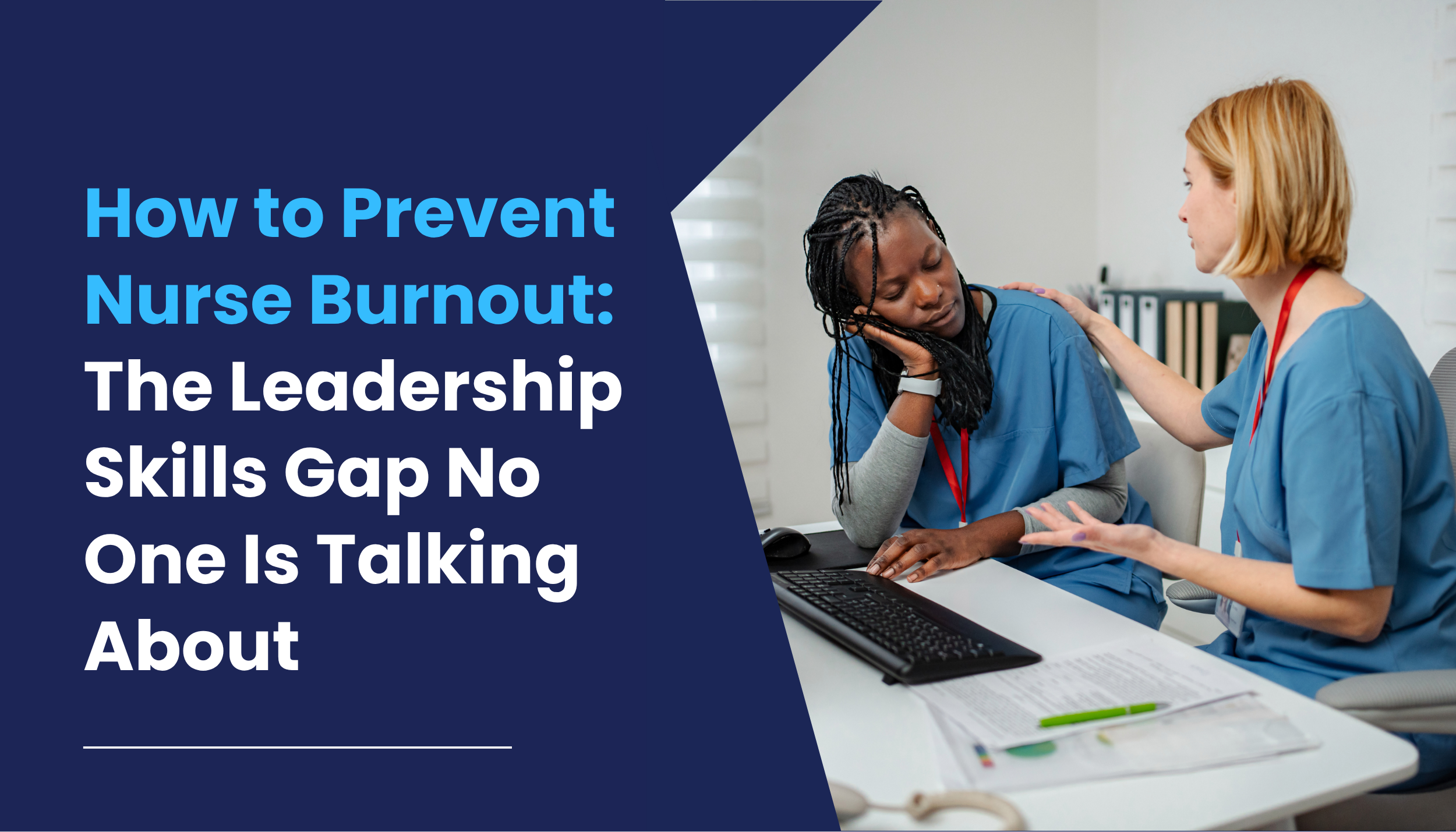
Why Nurses Burn Out: Staffing, Moral Injury, and the Leadership Gap
Preventing nurse burnout has become one of the most urgent challenges in health care. Nurses are leaving the profession in record numbers, driven by relentless job demands and an ongoing nurse shortage. Many are experiencing moral injury: the deep distress that comes from being unable to deliver the standard of care they believe their patients deserve. The mental health toll is real, and organizations are scrambling for answers.
Staffing is certainly a significant contributor to nurse burnout. Workloads that leave nurses overwhelmed day after day deplete their ability to recover. Much of the prevailing literature encourages organizations to focus on wellness and resilience initiatives to address and prevent burnout.
There may be another way to look at this. Catalyst Learning asked nursing professional development practitioners (NPDs) and nurse leaders the top challenges for frontline nurse leaders. The overwhelming response was staff burnout followed by employee engagement/retention. When asked about the leadership skills their charge nurses and other frontline nurse leaders were lacking, these NPDs and nurse leaders identified conflict resolution, giving feedback and coaching among the top three.
Wellness Skills vs Leadership Skills
In the wake of increasing levels of nurse burnout among staff, health care organizations are investing in wellness culturesto help nurses improve their work-life balance and self-care. Wellness cultures require a distinct skill set, including “behaviors that promote self-care, professional satisfaction and growth, and compassion for colleagues, patients and self”. But strategies for avoiding burnout must go beyond individual resilience and address the workplace conditions that generate burnout in the first place. These “wellness” skills are distinctly different from the skills identified by NPDs and nurse leaders as lacking in charge nurses and other frontline nurse leaders.
The American Organization for Nursing Leadership (AONL) identifies conflict resolution, giving feedback and coaching as leadership skills. The responses of the NPDs and nurse leaders identify a gap in the strategies for addressing nurse burnout. There is a profound opportunity for charge nurse and frontline nurse leadership development.
Frontline Nurse Leadership Development
Catalyst Learning also asked NPDs and nurse leaders to describe the current leadership training for frontline nurse leaders within their organizations. More than half of the nurse leaders responded that their organization had no program for frontline nurse leadership training or that the programs in place had significant gaps. Only 9% of the nurse leaders said that they had programs in place that were highly effective. NPDs concurred, with 44% responding that they had no program or a program with significant gaps.
Burnout often begins when employees experience challenges that they do not have ways to overcome. Organizational and interpersonal causes of employee burnout can be supported through leadership training. Charge nurses and other frontline nurse leaders who learn how to effectively resolve conflicts, provide feedback and coach staff, are well prepared to support staff wellbeing and monitor for signs of burnout.
Charge Nurse Leadership Training: How NCharge Addresses the Root Cause of Nurse Burnout
Catalyst Learning’s NCharge®: Nurses Learning to Lead Program provides leadership training designed specifically for giving charge nurses the resources and skills they need to address real workplace issues and improving workplace culture from the unit level up. The various courses provide an opportunity for charge nurses to practice skills to support their new leadership role.
Critical Thinking Skills for Frontline Nurse Leaders, one of the courses in the NCharge Program, highlights the application of critical thinking skills — observation, communication, analysis, and inference — to identify and mitigate burnout among staff. Charge nurses learn to embrace difficult conversations, analyze others’ opinions for validity, value different perspectives, and use all available information.
Nurse burnout is not inevitable. When charge nurses are equipped with the right leadership skills, they become the first line of defense against the conditions that drive nurses out. Investing in frontline nurse leadership development is how health care organizations become employers that nurses want to never leave.
References
Hughes, R., Meadows, M.T., & Begley, R. (2022). AONL Nurse Leader Competencies: Core Competencies for Nurse Leadership. Nurse Leader, 20(5), 437-443.
Walker, A. (2024). Nurse burnout diminishes patient safety, quality care, Stanford Study of 200K nurses finds. Nurse Burnout Diminishes Patient Safety, Quality Care, Stanford Study of 200K Nurses Finds | Nurse.Org
Reed, A. (2026). Who cares for the caregivers? The systemic drain depleting America’s nurses. Who Cares for the Caregivers? The Systemic Drain Depleting America’s Nurses | The Health Management Academy
American Medical Association (2024). Wellness-centered leadership playbook. Wellness-Centered Leadership Playbook | American Medical Association
Relias (n.d.) Healthcare burnout: Strategies for recovery and prevention (eBook). Healthcare Burnout: Prevention & Recovery (E-Book) | Relias